

Employees arrive at a garment factory in the morning after leaving work in the middle of the previous workday, because large cracks have appeared in the factory’s walls. The factory manager orders the workers to return to work, but the workers doubt the building’s safety. This is how a role-play exercise began during the “Train for global change” training in Romania. Participants were assigned roles: a manager, a worker, a representative of an international clothing company, and a local politician. The group’s goal was to reach a shared understanding of whether the factory work could continue.
The week-long course was attended by 22 people from numerous European countries. The course was organized by the local NGO A.R.T. Fusion and funded by Erasmus+.
The training aimed to teach non-formal and participatory global education methods for participants who work with young people, and to increase knowledge and understanding of global education themes.
According to Finnish Development NGOs Fingo global education is an activity that encourages people to become active and responsible global citizens by influencing knowledge, skills, values, and attitudes. The goal is to strengthen critical thinking skills and understanding of how each of us is connected to global phenomena such as poverty, inequality, racism, environmental catastrophes, or displacement and how our own actions can help build a globally just and sustainable future.
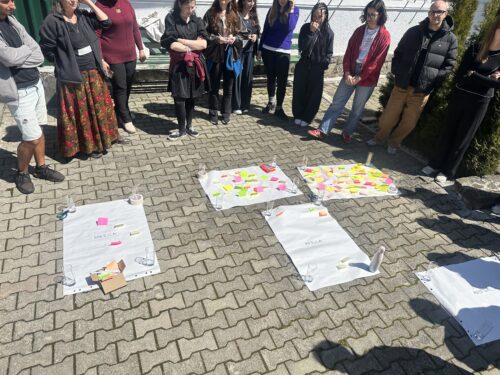
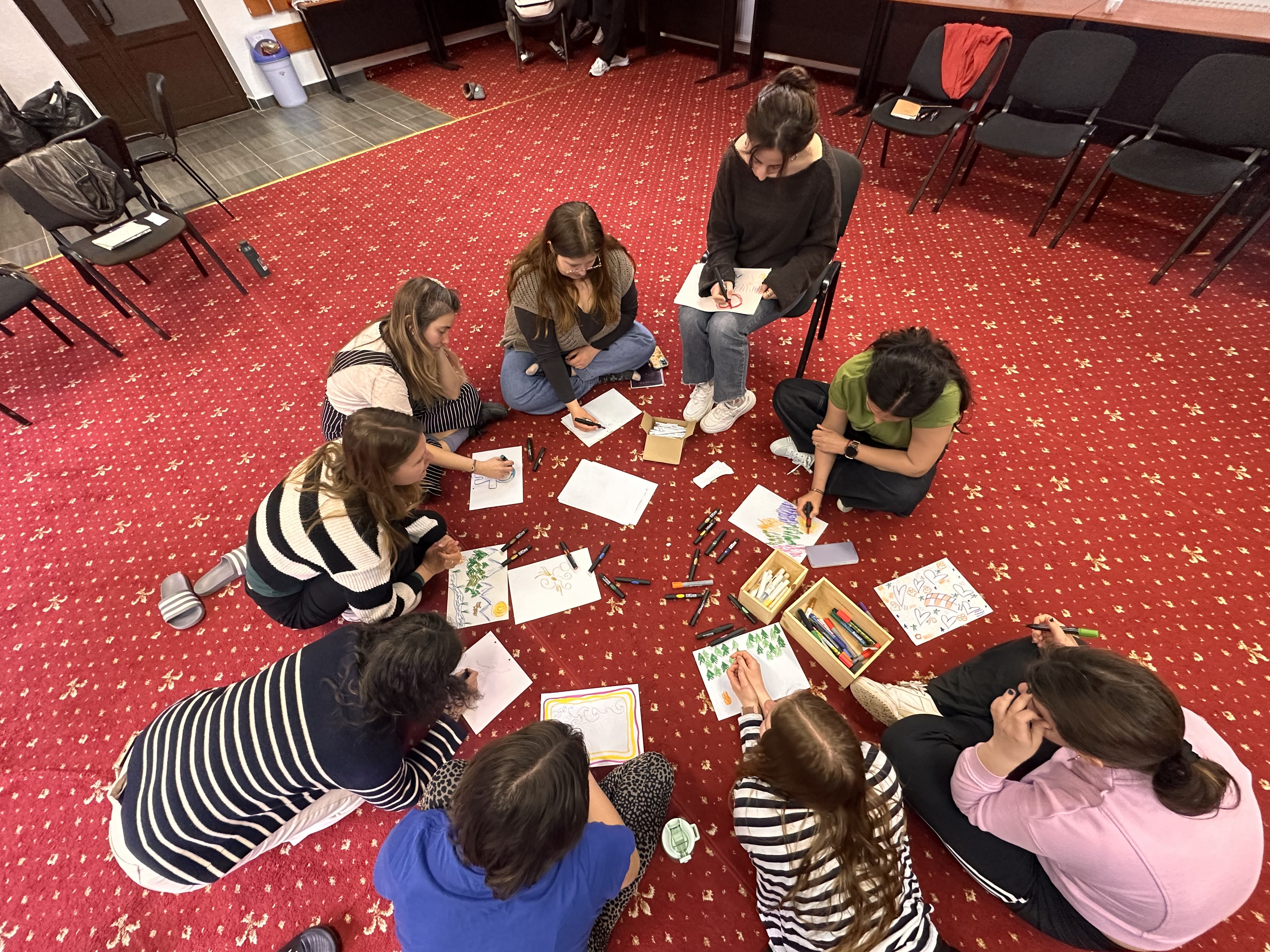
In the first days of the training, we were introduced to themes such as global supply chains and global citizenship. Towards the end of the week, we broke into smaller groups, chose topics of interest, and planned and facilitated workshops for the other groups.
I joined the course because I hoped it would provide tools for my future career as a handcraft teacher. I received valuable exercise ideas and teaching methods from the training. The topics of the training and many of the exercises would fit well into handcraft education. Participatory teaching methods can help students become more interested in the subject and relate to people around the world better than for example by watching a documentary.
The trainers and the participants inspired me to become an even more active citizen. I hope that I will have the opportunity to continue running global education workshops both at school and in my everyday life.