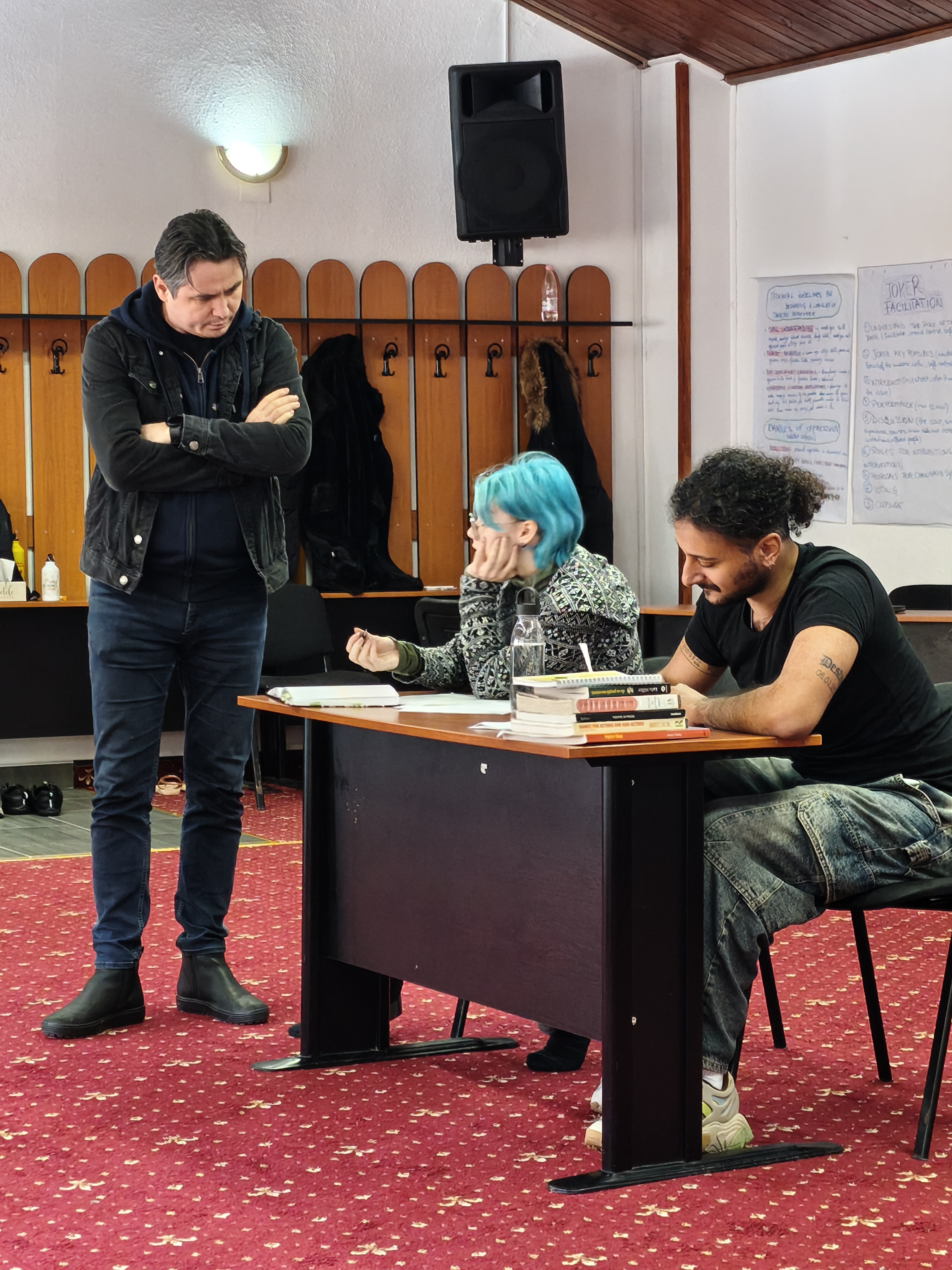


”I’ve known you since you were a kid, and now you’ve grown into such a beautiful woman.” The teacher smiles in an unctuous way and scoots his chair closer to the student. The visibly anxious student tries to back away. The teacher sets his hand on the back of the chair, trapping the student to her place. The student repeatedly tells him she only needs the letter of recommendation, but the teacher ignores her pleas. After what feels like an excruciatingly long time, the scene ends and the student manages to escape the harassing teacher.
The described scene is theatre, but the youth workers gathered in the city of Busteni, Romania from all around Europe and North Africa know it is based in reality. The joker facilitator invites the audience to describe what happened in the scene, what kind of oppression was depicted and who was the oppressor. Sexual harassment in an educational setting, assesses the audience. The joker facilitator gives the audience an opportunity to share feelings that the scene awoke in them – disgust, fear, anger, sorrow. The audience is asked to share similar experiences. Almost everyone has them. Some tell stories they have never dared to voice before.
The theatre of the oppressed is a collection of multiple participatory theatre methods, that were created by Brazilian Augusto Boal in the 1960’s as an objection to the oppressive military regime. The intention was to give oppressed communities means to understand the oppression they were experiencing and the skills to demand change.
One of the best-known methods is legislative theatre. It begins with a staged scene of real life oppression. The audience then considers what is the root cause of the oppression and how it can be influenced on a societal level. Based on the discussions, the audience can suggest a legislative amendment proposal. This method gives the oppressed people an opportunity to define their own problems and bring forward necessary solutions.
Legislative theatre requires persistence and skill from the facilitators. In addition to theatre sessions, research is being conducted and proposals for changes are being put forward. In the best-case scenario the ideas generated trough the method will turn into new laws or policies. Even if that doesn’t happen, the method is valuable because it gives oppressed and vulnerable people the opportunity to be heard and to participate concretely in dismantling the systematic oppression they experience. The artistic approach touches on the emotions and creates a deeper understanding of the issues.